
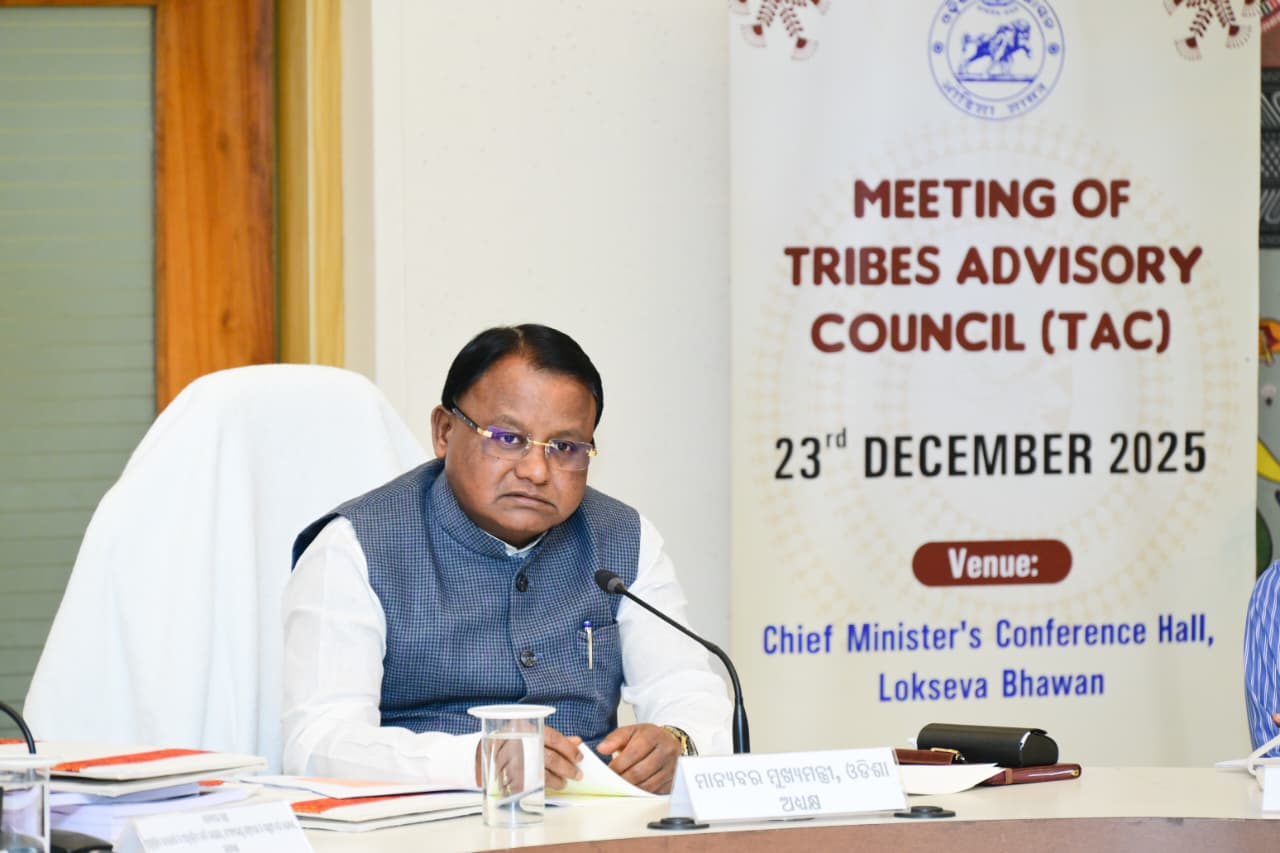

In a significant move toward inclusive development and cultural preservation, Odisha Chief Minister Shri Mohan Charan Majhi chaired the meeting of the Tribal Advisory Council (TAC) at the Lok Seva Bhawan today. The session centered on a transformative roadmap designed to honor tribal traditions while accelerating economic and educational opportunities for the state’s indigenous communities.
Accompanied by 18 members of the Council, the Chief Minister emphasized that the tribal community is not merely a beneficiary of government schemes but a pivotal partner in Odisha’s progress.
Key Policy Highlights & Proposals
The meeting resulted in several landmark recommendations aimed at socio-economic upliftment and legal clarity for tribal populations:
1. Spiritual and Cultural Recognition
In a first-of-its-kind move, the Chief Minister proposed an allowance system for priests in tribal villages. Recognizing the central role of traditional spirituality, he also directed special attention toward the development and protection of tribal places of worship, ensuring these sacred sites are preserved for future generations.
2. Bilingual Land Rights
To enhance transparency and accessibility, the Council recommended that Records of Rights (RoR) for tribal individuals be issued in both Odia and English. This measure aims to empower landowners by removing language barriers in legal and administrative matters.
3. Expanding the ST Inclusion List
The SCSTRTI (Scheduled Castes and Scheduled Tribes Research and Training Institute) has been tasked with conducting a detailed study to include more deserving communities in the Scheduled Tribe list. Their findings will be presented for recommendation in the next TAC meeting.
4. Boost to Tribal Tourism
The Council decided to fast-track Eco-tourism in tribal-dominated areas and expand Tribal Home Stay initiatives. This strategy is expected to generate sustainable livelihoods while showcasing Odisha’s rich tribal heritage to the world.
5. Educational Reforms
Broadening the academic horizon for tribal youth, the Council recommended introducing Arts and Commerce streams alongside Science for 11th and 12th-grade students at Eklavya Model Residential Schools (EMRS).
Governance and Legal Frameworks
The meeting also addressed critical legislative matters, specifically the PESA (Panchayats Extension to Scheduled Areas) Act. An inter-departmental committee will conduct a thorough review of Odisha-specific rules under PESA to ensure they are robust and effective, with final recommendations due at the next session.
Additionally, the Council resolved to examine various proposals sent by the Governor’s Office, ensuring a collaborative approach between the state executive and the constitutional head.
High-Level Attendance
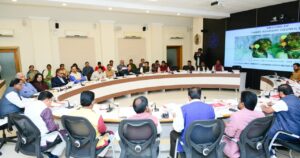
The meeting saw participation from high-ranking officials and tribal leaders, including:
- Shri Nityananda Gond, Minister for SC & ST Development.
- Shri Ananta Nayak (MP, Keonjhar) and Shri Balabhadra Majhi (MP, Nabarangpur).
- Shri Manoj Ahuja, Chief Secretary.
- Smt. Anu Garg, Development Commissioner.
- Senior secretaries from the Home, Revenue, Law, and Panchayati Raj departments.
Chief Minister Majhi concluded the session by reaffirming that the state’s vision for “Viksit Odisha” is incomplete without the holistic development of its tribal heartlands. “We must respect their religious sentiments and economic aspirations with equal fervor,” he stated.