
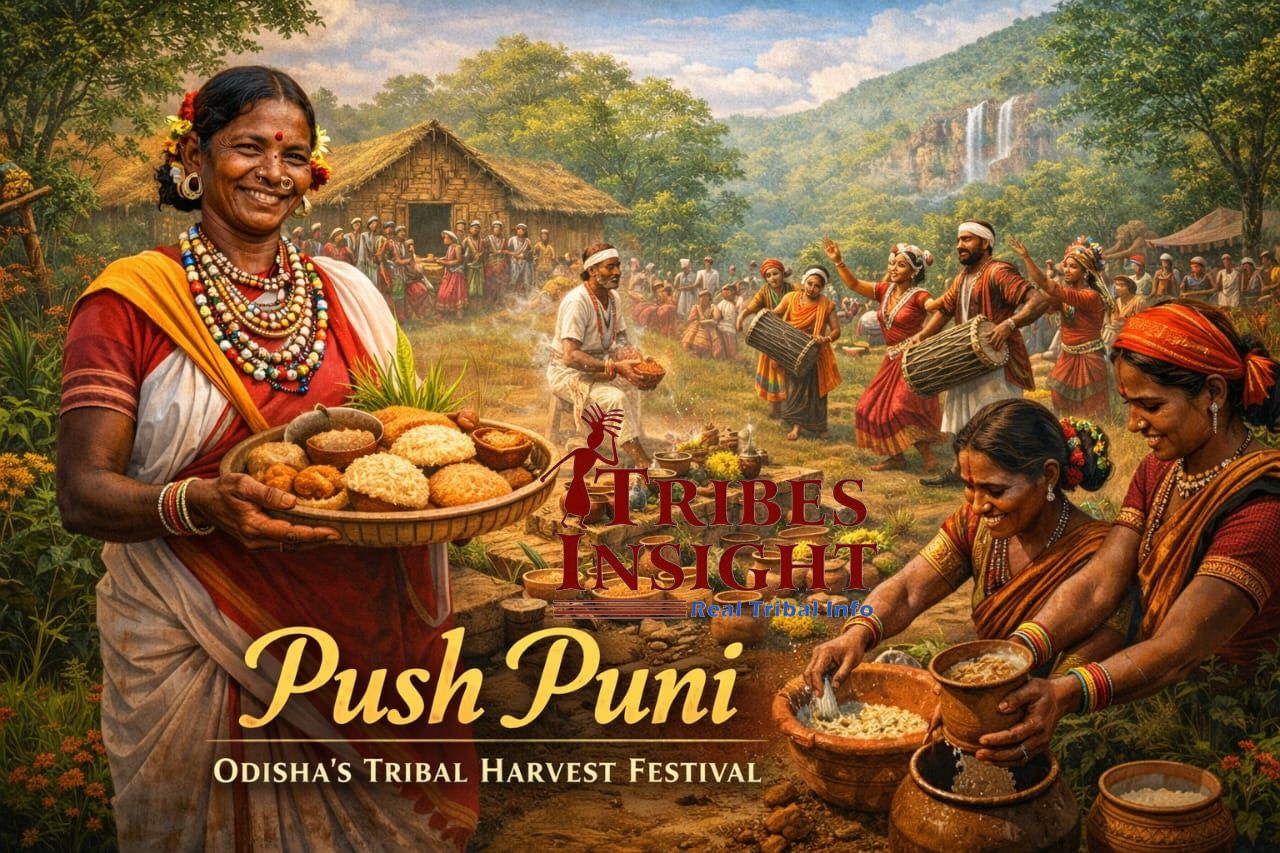
Push Puni: A Harvest Festival Rooted in Tribal Life of Odisha
Closely linked to agriculture and nature, the festival marks the completion of the harvest season and expresses gratitude to the earth for its bounty.

Push Puni is one of the most important traditional festivals celebrated by several tribal communities of Odisha, especially in the western and southern regions of the state. Closely linked to agriculture and nature, the festival marks the completion of the harvest season and expresses gratitude to the earth for its bounty.
Celebrated during the Odia month of Pausha (December–January), Push Puni is a time of joy, rest, and togetherness for tribal families. After months of hard work in the fields, the festival allows farmers to relax and celebrate the fruits of their labour.
On this day, tribal households prepare special food items using freshly harvested rice. Traditional dishes like manda pitha, chuda, rice cakes, and locally brewed rice beer are prepared and shared among family members and neighbours. Food plays a central role in the celebration, symbolising prosperity and abundance.
Worship of nature is a key part of Push Puni. Tribal people offer prayers to village deities, ancestral spirits, and natural elements like land, water, and forests. These rituals reflect the deep bond between tribal communities and nature, where the earth is seen not just as a resource but as a living mother.
Cultural activities add colour to the festival. Traditional dances, folk songs, and drum beats fill the villages with energy. Young and old participate together, strengthening community ties and passing traditions from one generation to the next.
Push Puni is more than a harvest festival, it is a celebration of identity, harmony, and sustainable living. At a time when modern life is rapidly changing rural traditions, festivals like Push Puni remind us of the wisdom, resilience, and cultural richness of Odisha’s tribal communities.
By preserving and respecting such festivals, Odisha continues to honour the roots of its indigenous heritage and the people who have protected nature and culture for centuries.