
As ‘Montha’ approaches, Tribal Odisha Still Carries the Wounds of 1999
As Odisha now gears up for another looming threat, Cyclone Montha, the past catastrophe feels alarmingly relevant.

The October 1999 super-cyclone that tore into the coast of Odisha did more than flatten villages and drown fields. As Odisha now gears up for another looming threat, Cyclone Montha, the past catastrophe feels alarmingly relevant. For tribal fisherfolk and smallholders in districts such as Kendrapara, Jagatsinghpur, Ganjam and Puri, the storm in 1999 was not only a meteorological cataclysm; it was a shock that exposed long-standing vulnerabilities: fragile housing, dependence on local ecological resources, and marginal access to state relief and reconstruction.
On 29 October 1999 the storm made landfall with winds measured well over 150 km/h, driving a storm surge that penetrated many kilometres inland and, in places, rose between five and seven metres. The official death toll compiled soon after the cyclone listed nearly 9,900 dead in India, with some districts, Jagatsinghpur above all suffering the heaviest losses. Estimates of people affected ran into the many millions, while more than a million homes were destroyed or so badly damaged that families were rendered homeless overnight.
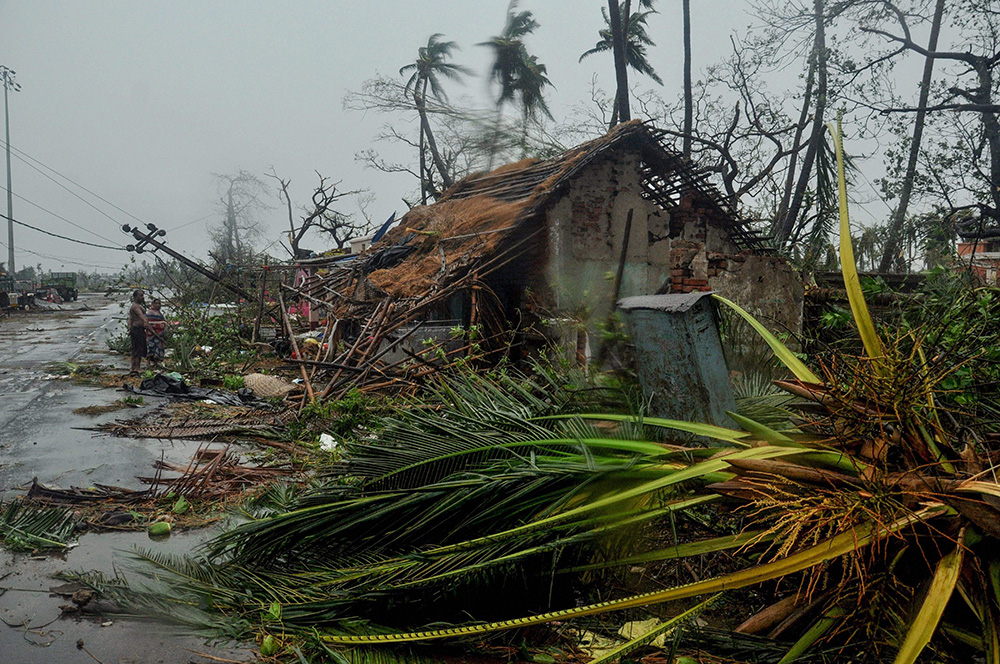
For tribal communities the damage had particular textures. Many coastal Adivasi and traditional fishing communities lived in thatched huts and seasonal shacks, clustered in low-lying hamlets and river mouths where they worked the sea, harvested estuarine fish, tended paddy or collected forest products. Those very settlement patterns, chosen over generations because of proximity to fish, salt pans or grazing—became death traps when the surge struck. Thatched roofs blew away, mud walls collapsed and boats that were both livelihood and lifeline were smashed or carried out to sea. The collapse of simple housing meant loss of sleeping spaces, cooking hearths, family records, ancestral relics and, in some cases, the homes of local healers and ritual specialists whose place in the village anchored social life.
Ecological damage multiplied social loss. The cyclone shredded the coastal shelter belt, mangroves, casuarina lines and other coastal vegetation that had previously buffered villages from high tides. Scientific studies since then have shown that intact mangrove belts measurably reduced loss of life during the 1999 disaster; where mangroves remained, villages suffered fewer fatalities. The flip side was that in areas where mangroves had been cleared or degraded, tribal fishermen and foragers paid a disproportionately high price. The destruction of mangroves also meant the loss of nursery grounds for fish and crustaceans, undermining a seasonal cycle of food and income that many tribal households relied on.
Economic ruin set in fast. Paddy fields were salinised and lay under seawater for months; standing winter crops were ruined and livestock drowned by the thousands. For tribal families with no formal savings, no land titles and limited access to credit, there was nowhere to turn. The immediate relief, food, medical camps and shelter, reached many, but rebuilding productive assets took far longer. External agencies and voluntary groups later helped construct concrete houses and wells in some adopted villages, yet these projects were patchy and sometimes failed to restore the livelihoods that were lost: boats, nets, seed stock, grazing grounds and knowledge of seasonal fishing grounds that had been altered by the changed coastline.
The cyclone also accelerated social displacement and altered demographic patterns. When a village lost its houses and immediate sources of food, families migrated to nearby towns or to urban slums in search of casual labour. Such migrations, sometimes temporary, sometimes permanent, fractured extended family networks and eroded traditional mutual-help systems. Children were pulled out of the few local schools; health education and preventive services were disrupted just when waterborne diseases surged. The state reported thousands of diarrhoea and cholera cases in the aftermath, conditions that hit marginalised communities hardest.
Recovery, when it came, revealed both resilience and injustice. Many tribal communities rebuilt by drawing on kinship labour, salvaged bamboo and local timber, and local knowledge of where to re-site a hamlet for slightly higher ground. Non-governmental organisations and international agencies funded rehabilitation projects, and some villages were “adopted” for reconstruction that replaced fragile huts with concrete houses and new tube-wells. Yet the transition from relief to durable livelihood restoration was uneven; where rehabilitation did not restore access to coastal commons, forests or fisheries, households were pushed into precarious wage labour or debt. Longitudinal studies and government reviews that followed the disaster emphasised that physical reconstruction alone could not repair the loss of ecological services, customary rights and cultural continuity.
A lesson from the tragedy is also one of agency. The 1999 cyclone changed public policy and local practice in ways that matter for tribal safety today. Odisha’s subsequent investments in early warning systems, cyclone shelters and community evacuation planning have been credited with dramatically reducing fatalities in later cyclones. The protection of mangroves and coastal belts has entered conversations about both conservation and tribal livelihoods, recognising that habitat protection and community well-being are joined at the hip. For the state’s tribal communities these structural improvements helped, but they did not erase the memory of October 1999: a date when storms rearranged coastlines, livelihoods and histories.
The super-cyclone of 1999 therefore must be remembered not only as a statistic of wind speeds or a tally of houses lost, but as a rupture in the cultural geography of Odisha’s tribal peoples. It is a story about fragile dwellings and durable knowledge, broken boats and unbroken songs, and about how environmental mismanagement, poverty and marginalisation can combine to turn a storm into a wholesale erasure of lives and ways of living. The recovery since then shows human tenacity: some communities rebuilt and adapted, others never fully recovered. For journalists, policy-makers and citizens who document and design interventions today, the task is to keep that complexity in view—protecting both lives and the ecological commons on which tribal livelihoods depend.