
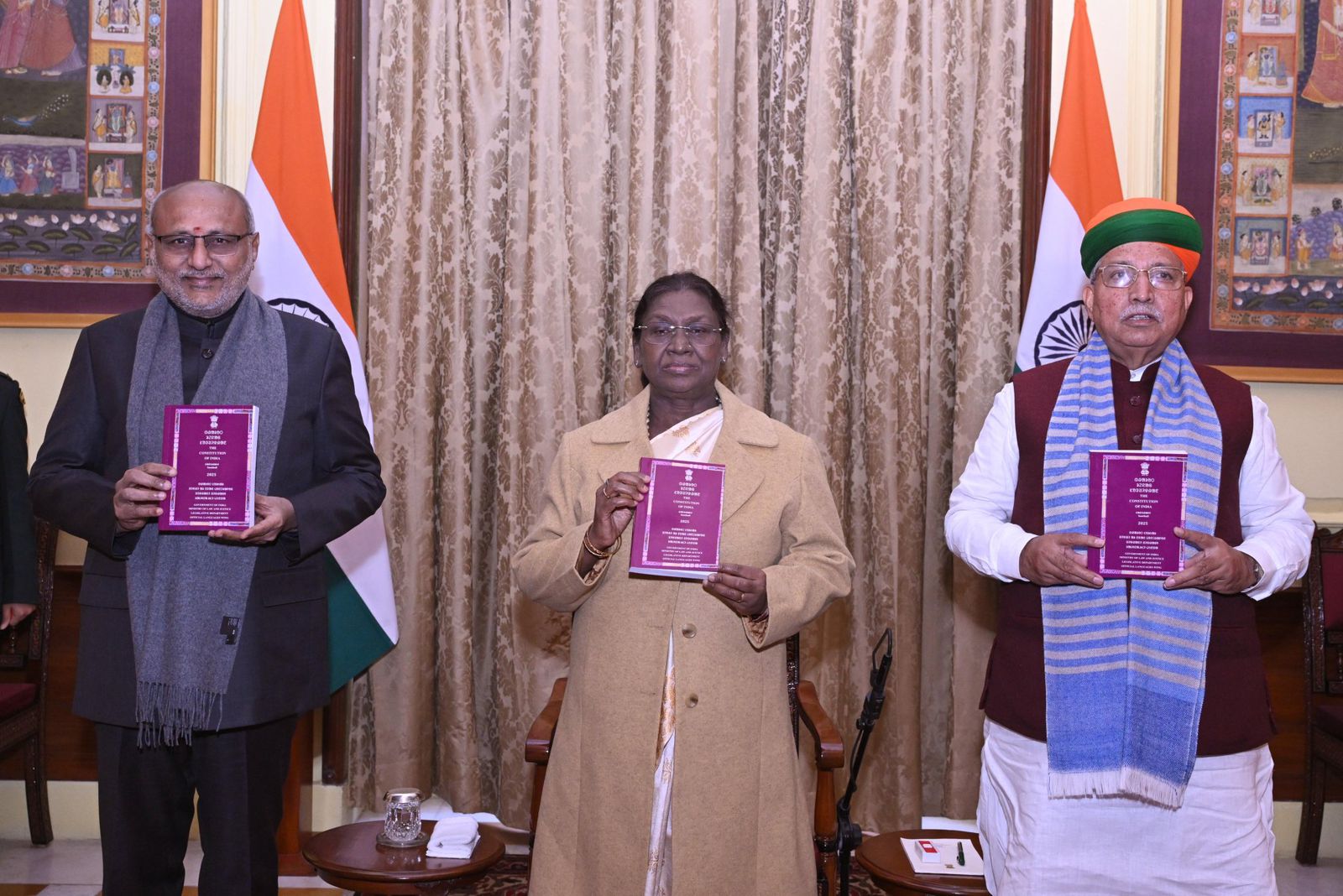

On a winter morning at Rashtrapati Bhavan, history found a new voice as President Droupadi Murmu released the Constitution of India in the Santhali language, written in the Ol Chiki script. The moment was both symbolic and deeply personal, marking a significant step towards linguistic inclusion and cultural recognition for one of India’s oldest living languages. The release coincided with the centenary year of the Constitution, adding to the quiet gravity of the occasion.
Santhali, included in the Eighth Schedule of the Constitution through the 92nd Amendment Act of 2003, is spoken by millions of tribal people across Jharkhand, Odisha, West Bengal and Bihar. For generations, the language has carried stories, songs and wisdom, now finding its place within the very framework that governs the nation. Addressing the gathering, President Murmu described the release as a moment of pride and joy for the Santhali community, noting that access to the Constitution in one’s mother tongue empowers people to read, understand and truly connect with its values.
The President appreciated Union Minister for Law and Justice Arjun Ram Meghwal and his team for their efforts in bringing the constitutional text into the Ol Chiki script, calling it a meaningful tribute in the Constitution’s landmark year. Vice President C. P. Radhakrishnan and other dignitaries were present to witness the occasion, which blended ceremony with quiet significance.
Prime Minister Narendra Modi also lauded the initiative, stating that the Santhali edition of the Constitution would help deepen constitutional awareness and democratic participation. He подчеркed India’s pride in Santhali culture and acknowledged the community’s contribution to the nation’s progress. With this release, the Constitution does more than speak the language of law; it speaks the language of belonging, affirming that India’s democracy is strongest when every voice can read, understand and claim it as its own.