
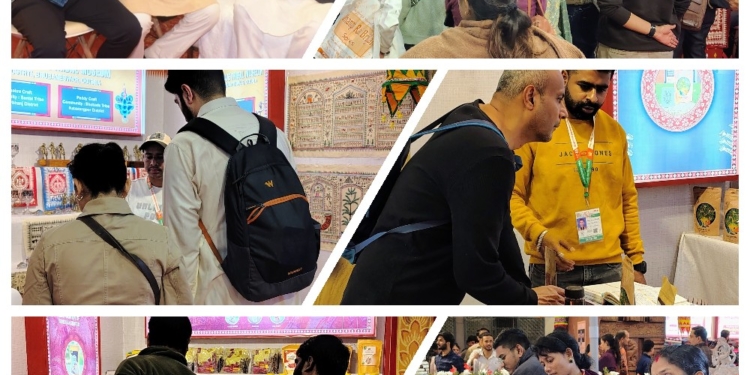
Odisha Pavilion at IITF 2025: A Vibrant Showcase of Tribal Culture, Craft and Enterprise
Located in Hall No. 4 of the Bharat Mandapam complex, it is captivating thousands of visitors with its artistic ambience and the extraordinary range of tribal crafts, foods, and cultural expressions on display.

The Odisha Pavilion at the 44th India International Trade Fair (IITF) 2025 has emerged as a striking tribute to the state’s rich tribal heritage. Located in Hall No. 4 of the Bharat Mandapam complex, it is captivating thousands of visitors with its artistic ambience and the extraordinary range of tribal crafts, foods, and cultural expressions on display.
Curated by the Department of SC & ST and Minority & Backward Classes Welfare, the pavilion places Odisha’s tribal communities at the heart of its narrative. With active participation from the Tribal Development Co-operative Corporation of Odisha Ltd (TDCCOL) and the Odisha State Tribal Museum under SCSTRTI, the pavilion stands as a living gallery of indigenous skill, sustainability, and self-reliance.
The stalls feature a spectacular array of tribal handicrafts, each carrying the imprint of the community it belongs to. The Bhottada tribe from Nabarangpur brings their intricate paddy crafts—delicate creations shaped from paddy stalks that reflect their agrarian roots. From Mayurbhanj, Santal artisans showcase their globally renowned Dokra metal craft, an ancient tribal art form admired for its earthy elegance. Paintings by the Gond tribe of Keonjhar and the Saura community of Rayagada infuse the pavilion with colour and symbolism, narrating tribal myths, rituals and everyday life through vivid motifs.
Adding to the charm are household products crafted from sabai grass by the ‘Maa Andharibudhi Sabai PG’ group of Mayurbhanj. This entirely tribal-led enterprise demonstrates how traditional knowledge continues to transform livelihoods across Odisha’s forested regions.
One of the pavilion’s biggest highlights this year is the Koraput Coffee stall—an inspiring tribute to the tribal farmers of Koraput who cultivate one of India’s finest indigenous coffees. Promoted by TDCCOL, the stall has seen a surge in visitors since Prime Minister Narendra Modi praised Koraput Coffee in his Mann Ki Baat address. The excitement grew further when Odisha Chief Minister Mohan Charan Majhi visited on November 22, sampled the brew, and encouraged its wider promotion to empower tribal growers and strengthen India’s self-reliance in coffee production.
Odisha’s tribal agricultural brilliance is also on display at the Adisha stall, where organic and naturally grown products are attracting buyers seeking authentic, chemical-free food items. Staples like Kandhamal turmeric powder, brown rice, black mustard, and dried red chilli—harvested by tribal farmers—are in high demand. Traditional herbal powders used by tribal healers for generations offer a glimpse into the deep-rooted indigenous health knowledge systems of the region.
The overwhelming response is reflected in the pavilion’s early success, with the four departmental stalls recording ₹1.3 lakh in business within the first ten days. But beyond sales figures, the Odisha Pavilion stands out for a deeper reason: it honours the identity, craftsmanship and resilience of Odisha’s tribal communities, bringing their stories to a national platform and strengthening the bridge between tradition and opportunity.