
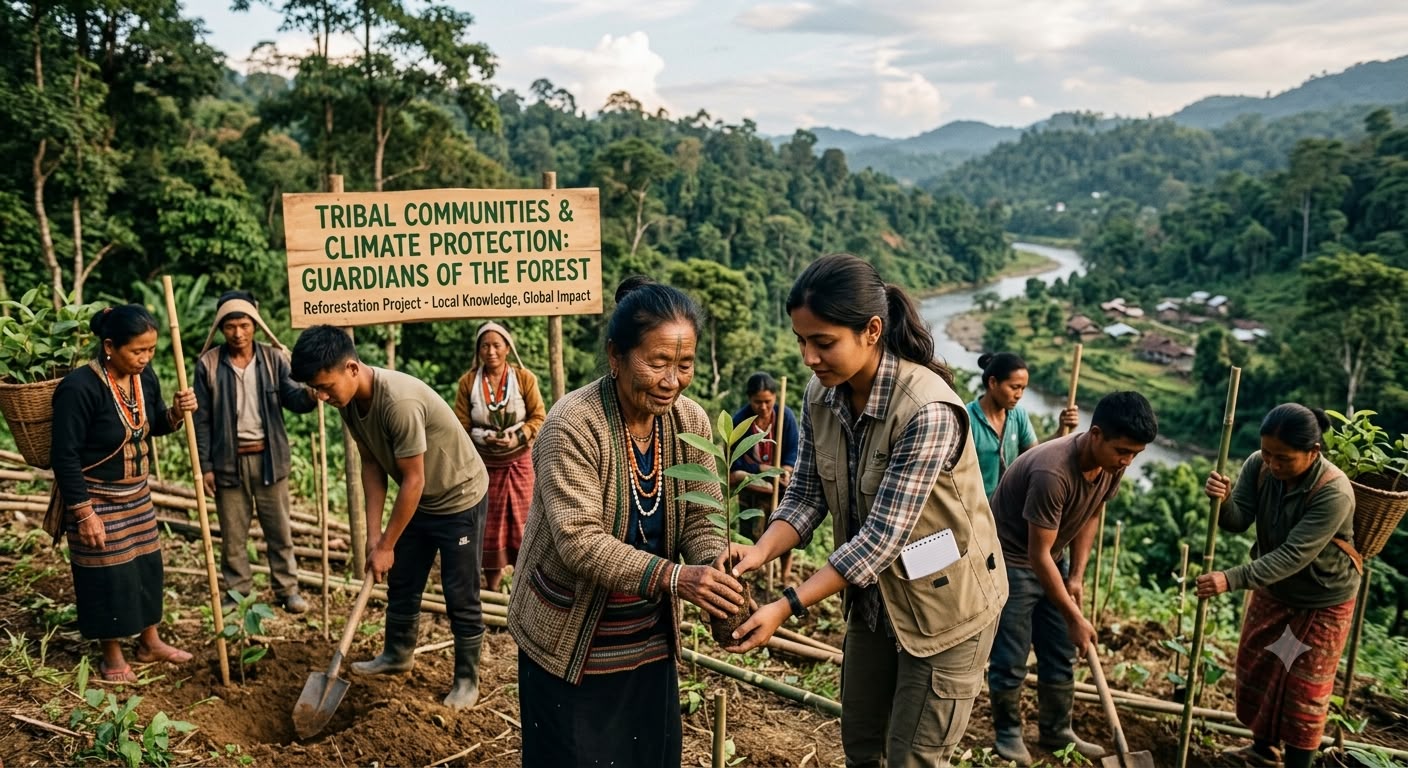

During the concluding session of the International Conference on “The Future of Environment and Climate Dynamics,” President Droupadi Murmu made an important point by saying, Tribals are the real ambassadors of climate change. Reflecting on her childhood memories spent in a small and remote tribal area, President Droupadi Murmu described an episode that happened with her father who gathered dry logs of wood for cooking purposes. Before putting the dry logs of wood into use, her father used to bow down to show his respect towards the tree which dried out but continued to provide them with its services, the same way it had served them with fresh air and oxygen while it was alive. This simple act signifies the tremendous respect and sensitivity of the tribal society towards trees and living organisms.
The tribals have always been living in sync with nature for centuries. Forests and plants, for them, these are not commercial entities but the divine life support system to be respected and protected. Even before modern science raised the issue of rising temperatures of the earth, the tribal people developed their traditional ecological knowledge through experience and observation.
While technology plays a significant role in modern climate solutions in the form of AI, predictions, and biochemistry, it is not enough to solve the climate problem on a global level. In addition to the modern innovations, traditional methods should be implemented to deal with this issue. Traditional techniques like forest regeneration, soil protection, and sustainable harvests are an example of how to become resilient to climate changes.
The tribes respect the Earth and take care of it instead of exploiting it. This proves that it is possible to develop without ruining nature. The climate on Earth changes rapidly; that is why it is necessary to consider other solutions aside from technical ones and think of the nature-first approach, which can be seen in tribes.